

POST /v1/events times out, you can’t tell whether Relay stored the event. Send an Idempotency-Key header and retry with the same key: Relay stores the event once, whatever happens to the responses.
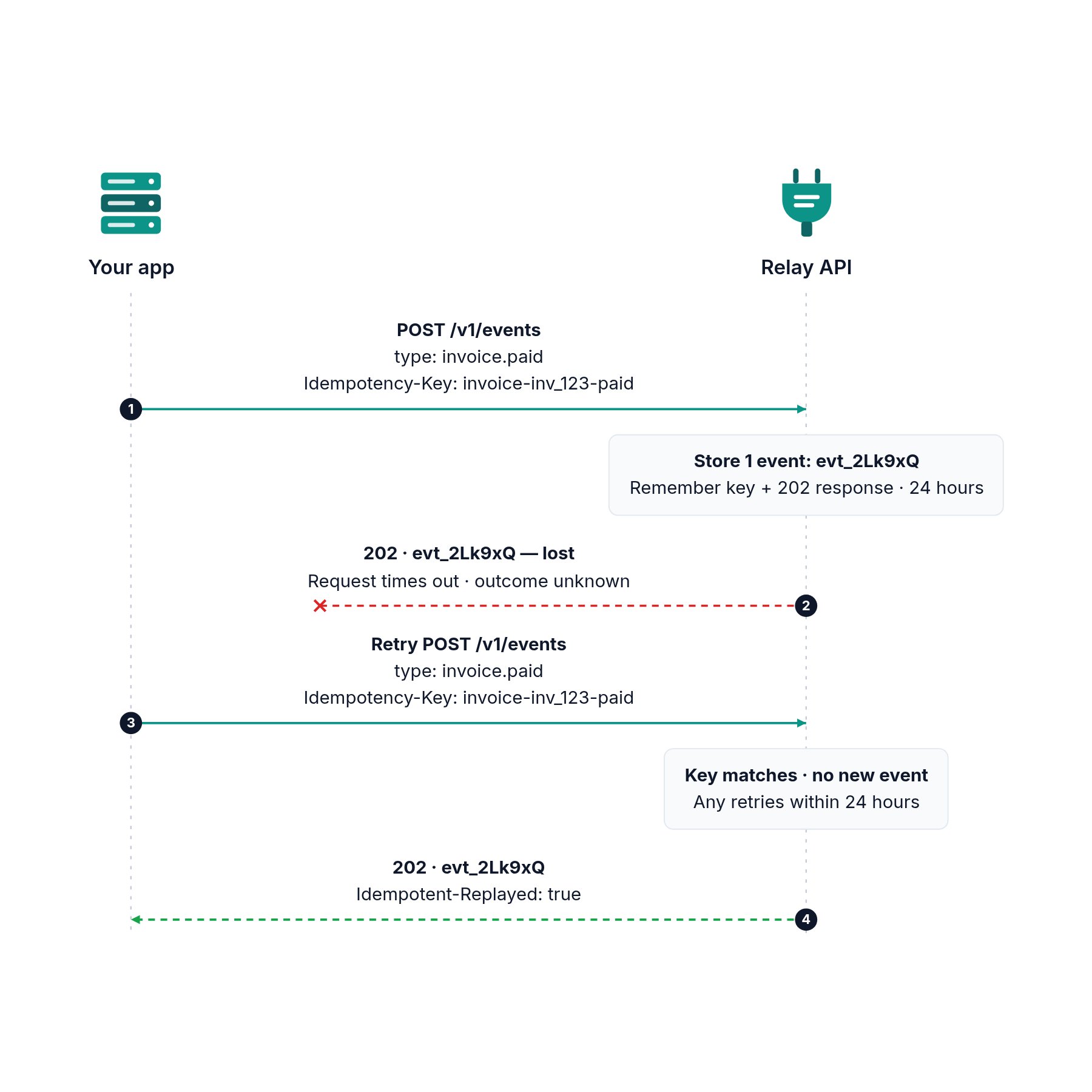
The first response is lost, so your app retries with the same key. Relay stores nothing new and replays the first response.
How keys are matched
Use a key that names the thing that happened, such as
invoice-inv_123-paid, rather than a random value made per attempt. Then a retry from a different process, or after a deploy, still matches.
Duplicates on the receiving side
Relay delivers at least once. A delivery can arrive twice, for example when your endpoint processed it but its200 was lost on the way back. Every event has a stable id (evt_...), and every delivery carries it in the Relay-Event-Id header. Record the ids you have processed and skip any you have already seen.
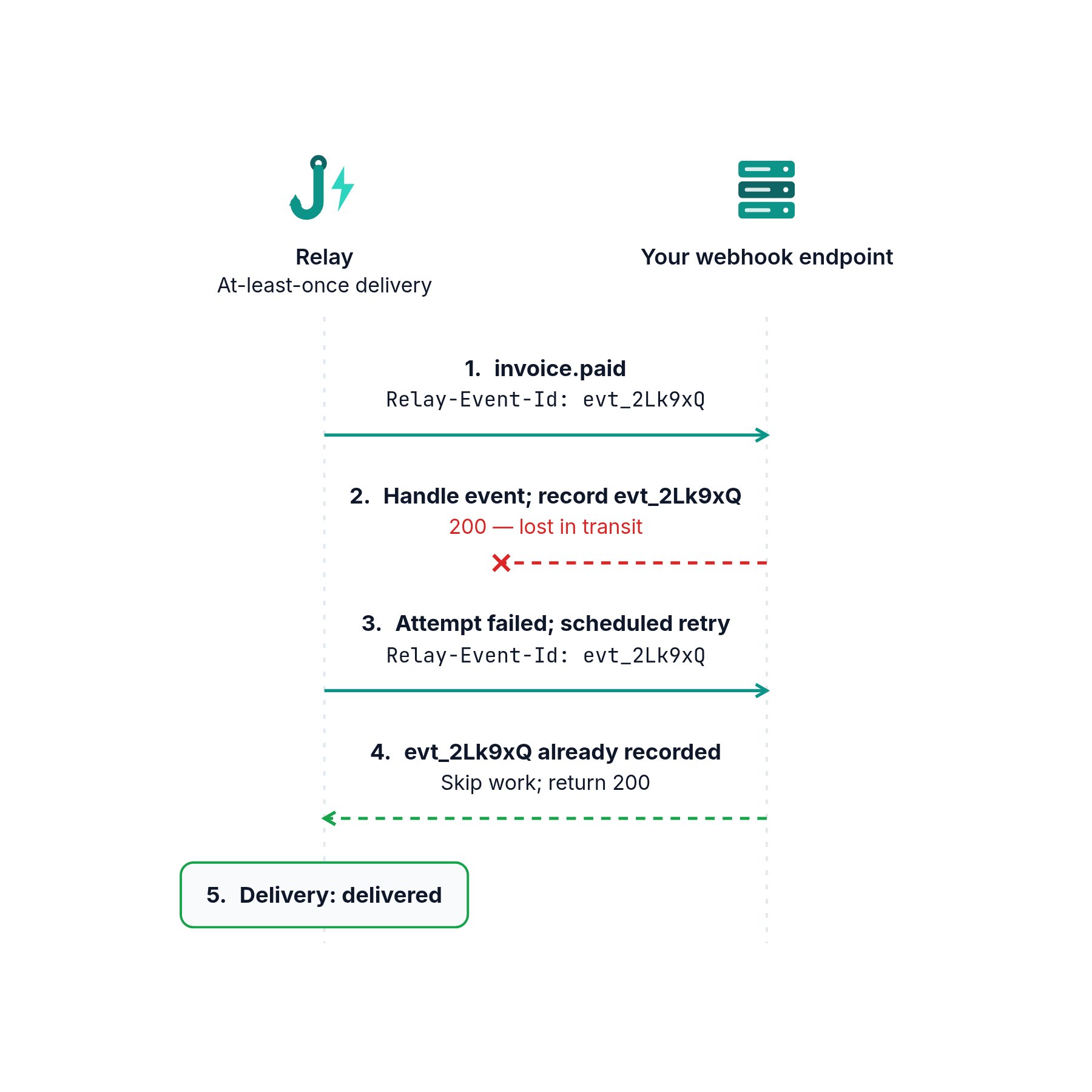
Your endpoint's 200 is lost, so Relay delivers the event again. The endpoint has already recorded the event id, skips the work and answers 200.
200 for a duplicate. An error makes Relay retry it again.