

202 Accepted once the event is stored. Delivery happens after that, so the response doesn’t wait for your endpoints.
Endpoints and subscriptions
An endpoint is a URL that receives webhooks. Each endpoint subscribes to the event types it wants. When you send an event, Relay creates one delivery for each endpoint whose subscriptions match, and tracks and retries each delivery on its own.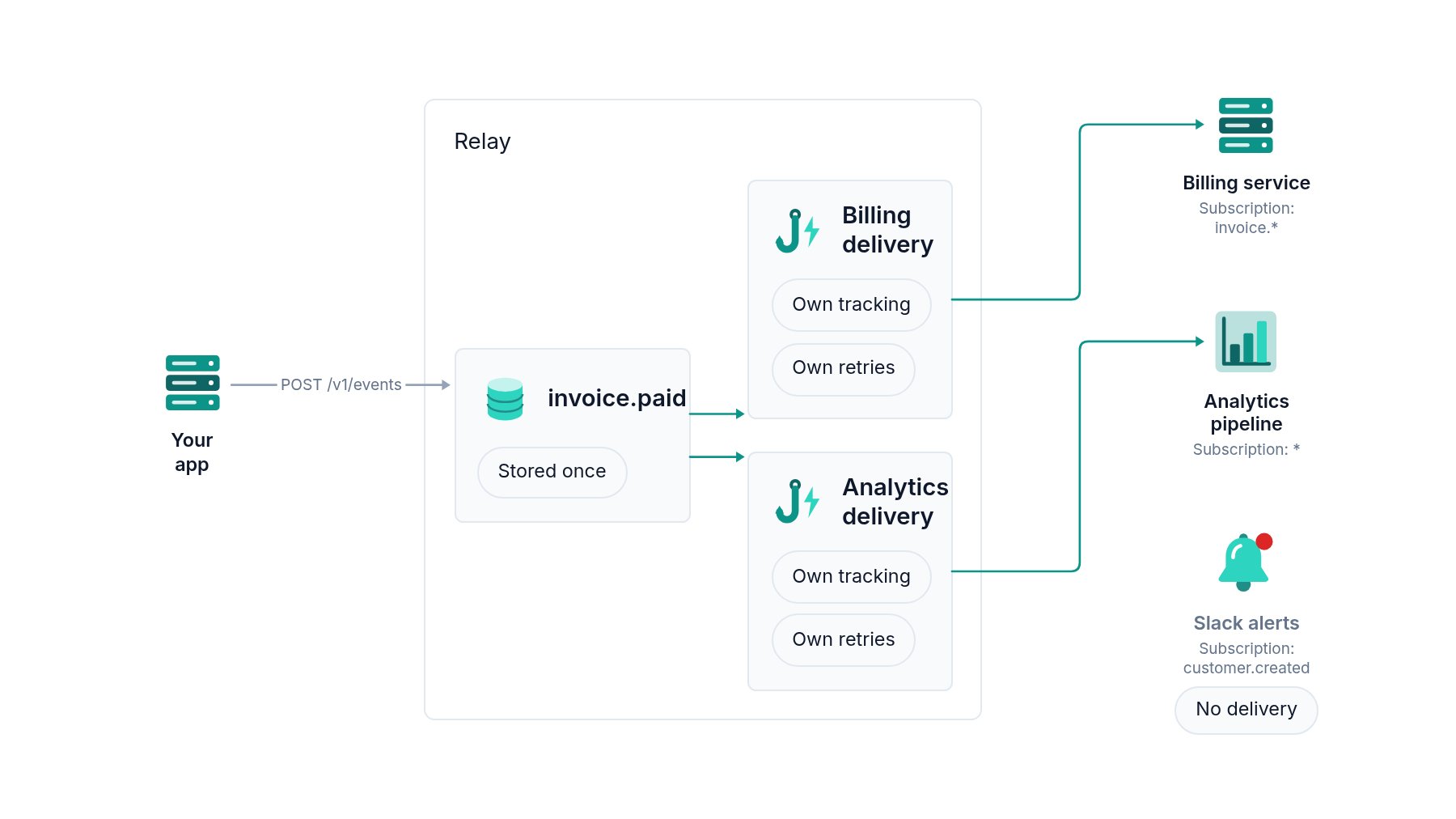
One invoice.paid event becomes two deliveries: billing and analytics subscribed to it, Slack alerts did not.
Event types
Name typesresource.action in lowercase, such as invoice.paid or customer.created. Relay doesn’t need you to register types first; the dashboard lists every type it has seen.
Payloads
data is any JSON object up to 256 KB, and Relay delivers it unchanged inside this envelope:
Batches
Send up to 100 events in one request withPOST /v1/events/batch. Each event in a batch can have its own idempotency_key. See Rate limits.